

Tech bro entrepreneur podcasts may make you think you can totally wing it when it comes to launching and marketing your company or personal brand, but come on, are those bros ever right? They’ve never had their privilege reality checked! Take it from a marketing nerd who’s seen some shit: it really makes your life easier to have a plan.
It’s a fresh new year, and though I am eyeing 2026 as highly sus until it proves to be an improvement on the dumpster fire of 2025, it is a good time for setting goals, making plans, and starting with strategy.
Every Marketing Strategy that I build is customized to where the client is in their journey (launching, in a growth phase, or entering a new market) and what their specific needs are at the time, but the foundations are the same.
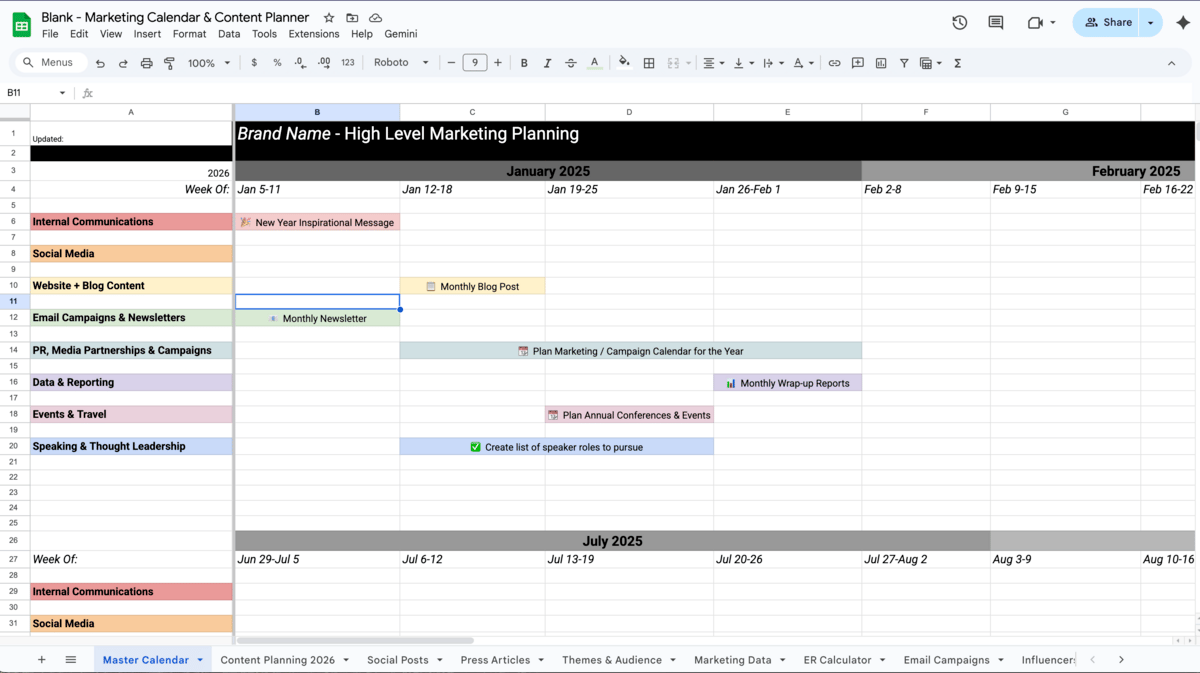
Below is what I usually include in a Marketing Strategy, usually in a presentation format (like Google Slides), but I often accompany it with systems to implement the strategy and do all of that as well. I’ll share one of my systems tools later on, a Marketing Calendar & Content Planner spreadsheet I’ve developed, or you can grab it here.
Forgive me for talking nerdy to you so early in the new year, but honestly, I’m usually glad when I plan ahead, and there’s a fresh surge of energy at the start of the new year (and cold wet weather keeping me indoors at the moment), so let’s make use of this time and get our strategy together!
📊 What I Usually Include in a Marketing Strategy:
🎯 Your Who & Why: A good marketing strategy should begin with a solid understanding of the brand and the problem they are solving. I usually go through several iterations of a Mission and Vision statement with a client, as well as several brand positioning exercises. This section can also contain elements of your origin story and the “Why” behind your business existing - why are you here and why should we care? It all starts there.
🎙️ Brand Voice: Especially for new brands who are building foundational documents like a Brand Strategy Guide, this section explores the general vibe of your brand, how you communicate (i.e. how formal or informal is your tone?), and some example statements that capture how your messaging should make recipients feel.
📈 Audit & SWOT Analysis: Especially for established brands, it’s important to get a snapshot of the current marketing channels, voice, and communication cadence as well as marketing performance data when building a strategy. This way you can see what’s working and what isn’t, and build new campaigns accordingly. It gives you a clearer picture to work from, which is why I usually suggest doing an audit for new clients as part of the onboarding process for a Strategy project. A SWOT Analysis identifies Strengths, Weaknesses, Opportunities, and Threats to address in the strategy.
💭 Set Goals: With clarity on where you sit, you can now set realistic and “SMART” goals, making sure they are Specific, Measurable, Attainable, Realistic, and Time-bound. You also can set out how you’ll be measuring success and some important KPIs that you want to measure and achieve with your marketing. Make sure these goals are relevant to your Mission and Vision and reflect your Why.
🦹♀️ Audience Personas: This is the true meat of a good strategy - mapping out who you’re talking to and your potential buyers journeys and pain points so you can build audience segments and personalize your marketing. The better you understand the psychology and behavior of the people you’re trying to reach or sell to, the better your company will do, so it’s best to get detailed here, but focus on the target audiences most likely to convert to loyal customers and brand evangelists.
🗺️ Customer Journey: Here you’ll put yourself in your potential customer’s shoes and clearly map out how you’ll meet them at each step in their buyer’s journey with your brand. You’ll lay out how you will attract the attention of new people, engage them as you offer solutions and listen to their needs, and then delight them once they are a customer so they return and share. (This process of customer acquisition is often called a funnel or a flywheel).
💪 Marketing Tactics: These are specific platforms, campaigns or ideas you’ll use to address the goals you set above. You should have plans to meet your target audience at each step in their customer journey, answer any questions, quell objections and make every touch point you have with them consistent and delightful.
💬 Content Categories: Put your storyteller’s cap on for this one, we’re coming up with consistent and repeatable themes or content pillars that help you come up with ideas for social media or email campaigns, blog posts or freebie content that collects data from your audience. What are the topics and themes that run through your posts or that you receive the most questions about? Identify enough that you won’t get bored, and to address each audience pain point and step in the journey that you identified earlier.
📆 Implementation & Systems: Now we’re moving into a systems building phase - what will you need to brainstorm, track and manage the campaigns and content that you want to include in your marketing? As I’m wrapping up the Strategy, I’m often setting up things like Trello boards or Asana for project management, organizing Google Drive folders of assets, and creating spreadsheets to use as a marketing calendar and content planner, whatever works best for each client (often incorporating their existing systems and refining and integrating their tech stack along the way).
🎉 Campaign Planning: You can get as detailed as you need to here - planning out a major campaign, event or advertising spend for each quarter of the next year or two, or even monthly, or lay out different phases of a launch. Identify and flesh out ideas for seasonal, relevant campaigns that engage your audience that you can implement to help reach your goals.
✨ Branding & Style Guide: As a designer, I always try to help maintain brand consistency across different platforms and including style guidelines in the Strategy helps get this effort off to a good start. The style guide identifies the various versions of the logo and how they are used, brand colors (with hex # codes and where they are used), typefaces and which to use where, and a few examples of brand styles applied to things like business cards, presentation layouts or advertisements.
💸 Timelines & Budgets: Probably my least favorite part, making your plans realistic based on your marketing budget, and identifying costs so you can plan accordingly. Your accounting department will thank you! Here you can lay out major marketing spends for each month or quarter as well as plan for ongoing costs like subscription fees, printing and software.
👀 Competitive Analysis: This is especially important for Go to Market strategies and businesses launching or moving into a new market. It’s a snapshot of who your top competitors are, what they offer, and how you can differentiate.
If you’re still with me, first of all thank you for reading all this. I know it seems like a lot, and it is, building a full Marketing Strategy with all or most of these components can take me months, and it’s constantly evolving once it’s live. It’s a good thing to review it each quarter, track data and wins monthly, and do a wrap-up summary and strategy review each year to stay on top of it all. But don’t worry, you don’t have to do it all alone! You can always hire a marketing strategist like me to do some of the heavy (nerdy) lifting!
Jump Start Your Marketing Planning with this Spreadsheet

Other Recent News & Timely Highlights
Marketing Systems Mastery in 2026: If you are an entrepreneur, business owner or have a personal brand and you want to get your content game on point, make this year your b*tch and PLAN it. My secret sauce is in the spreadsheets - plan your Marketing from top level on down with my Ultimate Marketing Calendar & Content Planner. I will also send it as a perk to all my paid subscribers. Become an Awesome Supporter and I’ll send you a special email with a download. 📆
Mendo Cup Seeks Sponsors: I’ll be helping with the website and marketing for The Mendo Cup, a small community competition for and by small farmers. I’m also judging for the event! They are looking for sponsors to help make this event in May in Willits possible. If Mendocino has a special place in your heart too, please spread the word - here’s the sponsorship deck.
Strategy Work Examples: I am wrapping up some Marketing Strategy and Website Redesign work for longtime client Sol de Mendocino this month, and I just put up a case study on my website about the projects. Other examples of Marketing Strategy work in my portfolio include The Cannabis Trail Campaign, and my ongoing brand building / strategy work for Doobie Nights.
CannaGen Sesh Weds: I am hosting another live stream "Sesh” tomorrow for my client CannaGen, a genetics marketplace platform. Wednesday, January 7th at 11am PST, join the discussion on StreamYard, LinkedIn or Instagram and ask our badass breeders a question. I’ll be running things behind the scenes and producing the event, and registration is free!
Let us Boss Your Email: If you’re struggling to properly set up and utilize your email marketing, the Canna Boss Babes can help! My friend Ishqa and I are teaming up to offer email marketing services for plant-focused and adjacent brands, because the power of owned platforms is essential. Fill out the form if this sounds like something you’d like to explore. And download the Hemp Advocacy toolkit from the Canna Boss Babes website to turn your email list into an engine for change!


Support My Work by becoming one of my Awesome Supporters. It’s only $5 a month, less than a fancy matcha latte! Or you can share this newsletter with a friend - look for your unique referral link below to earn Rewards. I publish on beehiiv, which is a great platform if you’re looking to start your own newsletter (use my recommendation link). No pressure, but I’d love to know what perks would get you to put $5 on it and Upgrade to Paid?
THANK YOU for reading! 🙏 Reminder: Clicking on the ad or newsletter recommendation below, or referring to a friend all help me out - yay! Happy New Year! 🥳
Why AI Isn’t Replacing Affiliate Marketing After All

“AI will make affiliate marketing irrelevant.”
Our research shows the opposite.
Shoppers use AI to explore options, but they trust creators, communities, and reviews before buying. With less than 10 percent clicking AI links, affiliate content now shapes both conversions and AI recommendations.
